
Vertigo & Balance
Diagnosis and treatment of dizziness, vertigo and balance disorders with advanced care.
Overview
Understanding Vertigo & Balance
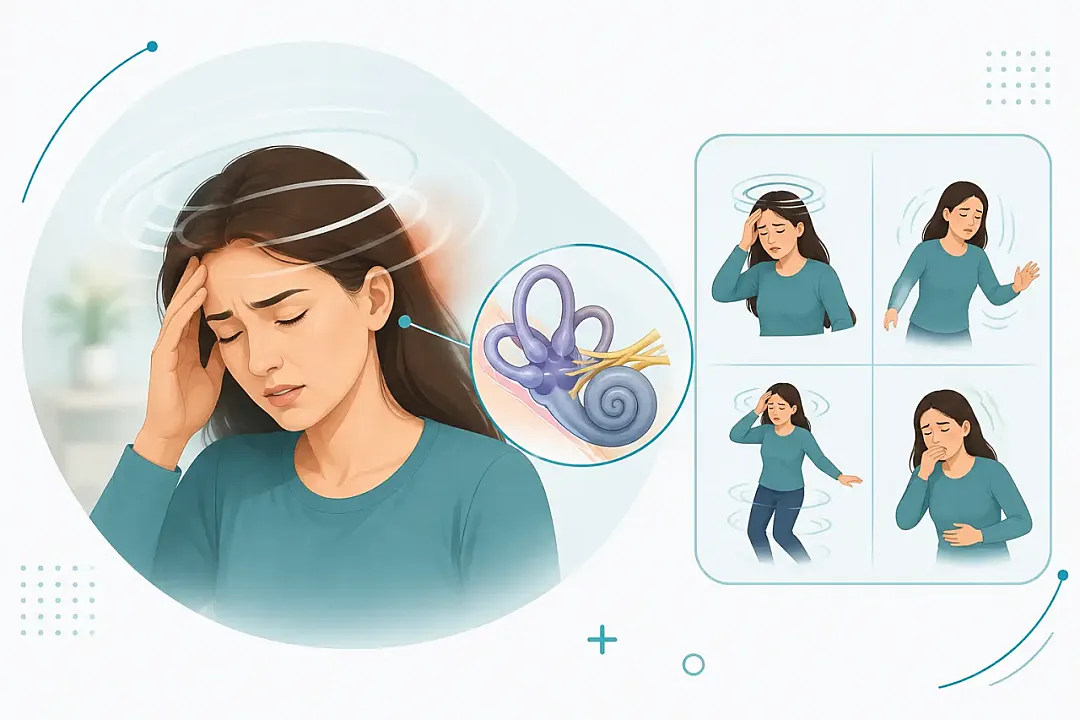
Vertigo is a condition that creates the false sensation that you or your surroundings are spinning or moving, even when you are standing still. Unlike general dizziness, vertigo usually indicates a problem involving the inner ear or the body's balance system. It may occur suddenly, last for a few seconds, several minutes, or even longer, depending on the underlying cause. Common conditions associated with vertigo include Benign Paroxysmal Positional Vertigo (BPPV), Ménière's disease, vestibular migraine, inner ear infections, vestibulopathy and other balance disorders.
At Dr Hans' Centre for ENT, we provide comprehensive evaluation and personalized treatment for vertigo and balance disorders. Our specialists identify the underlying cause through detailed clinical assessment and advanced diagnostic testing before recommending the most appropriate treatment plan.
- Dizziness or light-headedness
- Loss of balance or unsteadiness
- Nausea or vomiting
- Difficulty walking steadily
- Ringing in the ears (tinnitus)
- Hearing loss in one or both ears
- Abnormal eye movements during an episode
- Benign Paroxysmal Positional Vertigo (BPPV)
- Ménière's disease
- Vestibular migraine and vestibulopathy
- Inner ear infections (Labyrinthitis or Vestibular Neuritis)
- Head injury
- Age-related degeneration of the balance system
- Certain medications affecting balance
- Vitamin D & B12 deficiency
- Detailed medical history and symptom assessment
- Comprehensive ENT examination
- VNG & posturography
- Hearing assessment
- Imaging studies such as MRI or CBCT/CT scan when clinically indicated
- Medications to relieve vertigo and nausea
- Canal repositioning manoeuvres for BPPV
- Vestibular rehabilitation therapy
- Treatment for Ménière's disease or vestibular migraine
- Management of underlying ear infections
- Lifestyle and dietary modifications where appropriate
- Surgical treatment for selected patients with complex or persistent conditions
Although not every type of vertigo can be prevented, managing underlying ear disorders, controlling migraine triggers, staying well hydrated, avoiding sudden head movements during recovery, following prescribed vestibular exercises, and attending regular follow-up appointments can help reduce the frequency and severity of vertigo episodes.
At Dr Hans' Centre for ENT, we offer comprehensive care for vertigo and balance disorders using advanced diagnostic technology and evidence-based treatment protocols. Our experienced ENT specialists evaluate conditions such as BPPV, Ménière's disease, vestibular migraine, and other inner ear disorders with a personalized approach. From accurate diagnosis and vestibular testing to rehabilitation and long-term follow-up, we focus on helping patients regain confidence, improve balance, and return to their normal daily activities.
When to See a Doctor
- Recurrent vertigo
- Severe dizziness or frequent falls
- Hearing loss or ringing in the ears
- Persistent imbalance
- Vertigo with weakness, difficulty speaking, double vision, or sudden severe headache (seek immediate attention)
Common Questions
Frequently Asked Questions
Dizziness is a general term used to describe feeling light-headed or unsteady. Vertigo is a specific type that creates the sensation that you or your surroundings are spinning or moving.
Benign Paroxysmal Positional Vertigo (BPPV) is one of the most common causes of vertigo. It occurs when tiny calcium crystals inside the inner ear become displaced, triggering dizziness with certain head movements.
Yes. Many cases of vertigo are caused by inner ear conditions such as BPPV, Ménière's disease, vestibular neuritis, or labyrinthitis, all of which affect the body's balance system.
Diagnosis involves a detailed medical history, ENT examination, balance assessment, hearing evaluation, positional tests such as the Dix-Hallpike manoeuvre, and additional investigations when required.
Vestibular rehabilitation is a specialized exercise programme that helps the brain adapt to balance disorders, improving stability, reducing dizziness, and restoring confidence during daily activities.
Yes. Most patients improve with medications, repositioning manoeuvres, vestibular rehabilitation, and treatment of the underlying condition. Surgery is required only in selected cases.
Yes. Vestibular migraine is a recognised cause of recurrent vertigo. Stress may also worsen symptoms in some individuals, making proper diagnosis and management important.
Seek immediate medical care if vertigo occurs with sudden weakness, difficulty speaking, severe headache, loss of consciousness, double vision, chest pain, or difficulty walking, as these symptoms may indicate a serious medical condition.
We're Here to Help You Hear Better
Our experts are ready to help you with accurate diagnosis and the right treatment.