
Nasal Polyps
Medical and surgical management of nasal polyps affecting breathing and smell.
Overview
Understanding Nasal Polyps
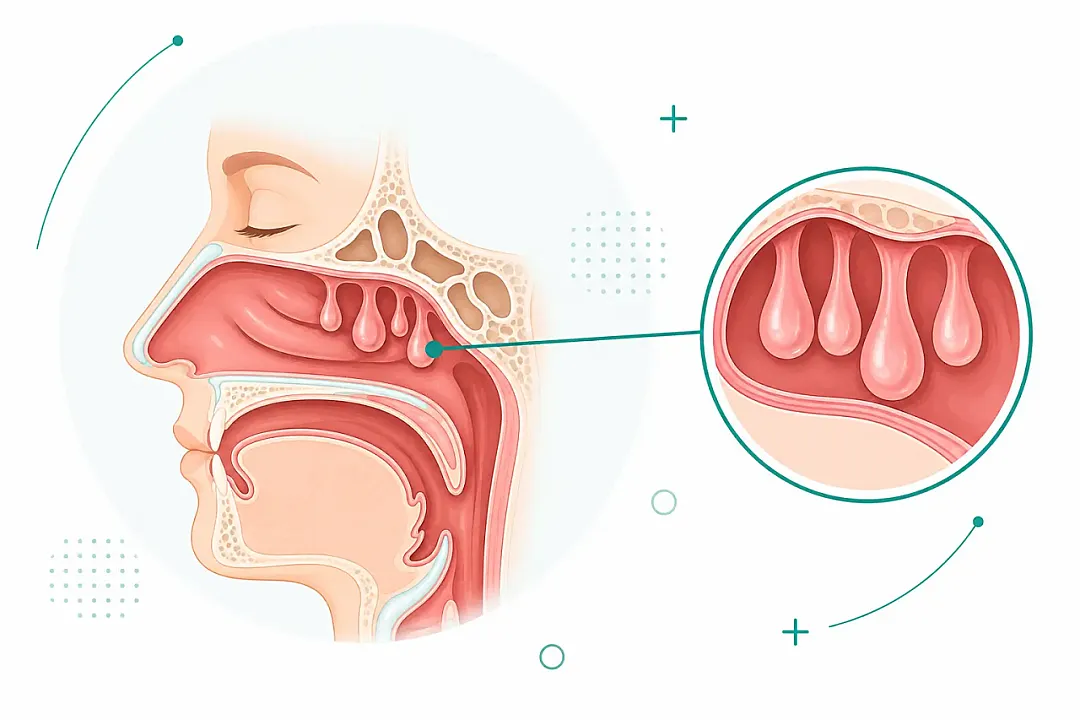
Nasal polyps are soft, painless, non-cancerous growths that develop on the lining of the nose or paranasal sinuses due to long-standing inflammation. They are commonly associated with chronic sinusitis, allergies, asthma, or recurrent nasal infections. Small polyps may not cause symptoms, while larger or multiple polyps can block the nasal passages, making breathing difficult and affecting the sense of smell.
At Dr Hans' Centre for ENT, we provide comprehensive evaluation and personalized treatment for nasal polyps. Our specialists identify the underlying cause and recommend the most appropriate treatment, which may include medications, allergy management, or minimally invasive endoscopic sinus surgery when required.
- Persistent nasal blockage
- Runny nose
- Reduced or complete loss of smell
- Decreased sense of taste
- Postnasal drip
- Facial pressure or discomfort
- Frequent sinus infections
- Snoring or disturbed sleep
- Chronic sinusitis
- Allergic rhinitis
- Asthma
- Recurrent nasal infections
- Aspirin sensitivity in some individuals
- Family history of nasal polyps
- Chronic inflammation of the nasal lining
- Certain immune-related conditions
- Medical history and symptom assessment
- Nasal examination
- Diagnostic nasal endoscopy
- Allergy evaluation when indicated
- Cone Beam CT (CBCT) scan or CT scan for larger or recurrent polyps
- Assessment for associated sinus disease
- Nasal steroid sprays to reduce inflammation
- Oral medications when clinically indicated
- Saline nasal irrigation
- Allergy management for associated allergic conditions
- Treatment of chronic sinus infections
- Endoscopic Sinus Surgery for persistent or large nasal polyps
- Regular follow-up to monitor recurrence
Although nasal polyps cannot always be prevented, managing allergies, controlling chronic sinus inflammation, avoiding exposure to irritants such as tobacco smoke and pollution, maintaining good nasal hygiene, and following your prescribed treatment plan may help reduce the risk of recurrence.
At Dr Hans' Centre for ENT, we provide comprehensive care for patients with nasal polyps using advanced diagnostic tools, including nasal endoscopy and CBCT imaging when required. Our experienced ENT specialists focus on treating both the polyps and the underlying cause, helping reduce symptoms and improve long-term nasal health. When surgery is necessary, we offer minimally invasive endoscopic techniques aimed at faster recovery and better patient outcomes.
When to See a Doctor
- Persistent nasal blockage
- Loss of smell
- Repeated sinus infections
- Facial pressure
- Symptoms continuing despite medication
Common Questions
Frequently Asked Questions
Nasal polyps are soft, non-cancerous growths that develop inside the nose or sinuses due to long-term inflammation. They can vary in size and may block the nasal passages if they become large.
No. Nasal polyps are benign (non-cancerous) growths. However, persistent nasal symptoms should always be evaluated by an ENT specialist to confirm the diagnosis.
They are commonly associated with chronic sinusitis, allergies, asthma, recurrent infections, and other conditions that cause long-term inflammation of the nasal lining.
Yes. One of the most common symptoms of nasal polyps is a reduced or complete loss of smell, particularly when the polyps block airflow within the nose.
No. Many patients respond well to medications and allergy management. Surgery is recommended only when symptoms persist despite appropriate medical treatment or when the polyps are large.
Yes. Nasal polyps may recur, especially in people with chronic allergies or sinus inflammation. Regular follow-up and continued medical management can help reduce the risk of recurrence.
Diagnosis is usually made through an ENT examination, nasal endoscopy, and imaging studies such as a CBCT scan or CT scan when necessary.
You should seek medical advice if you have persistent nasal blockage, loss of smell, recurrent sinus infections, facial pressure, or symptoms that do not improve with medication.
We're Here to Help You Hear Better
Our experts are ready to help you with accurate diagnosis and the right treatment.